



20 Pupil Premium Strategies For Cost Effective Impact In Primary And Secondary Schools 2026/27

This article summarises the best research into pupil premium strategies that work. Much of this research is from the EEF Toolkit as well as from former pupil premium award winners to bring you what we believe are the best pupil premium strategies that primary and secondary school leaders should be looking at.
For many primary schools and secondary schools, because of the area they serve, pupil premium funding forms a sizeable chunk of the overall school budget.
With this comes accountability; schools must create a pupil premium strategy statement to report on how they spend their pupil premium and ensure that any pupil premium strategies or interventions they introduce are as effective as possible. The DfE provides a pupil premium strategy statement template to support this.
To have as wide a reach as possible, a menu of approaches that are free or very low cost, but also highly effective is ideal.

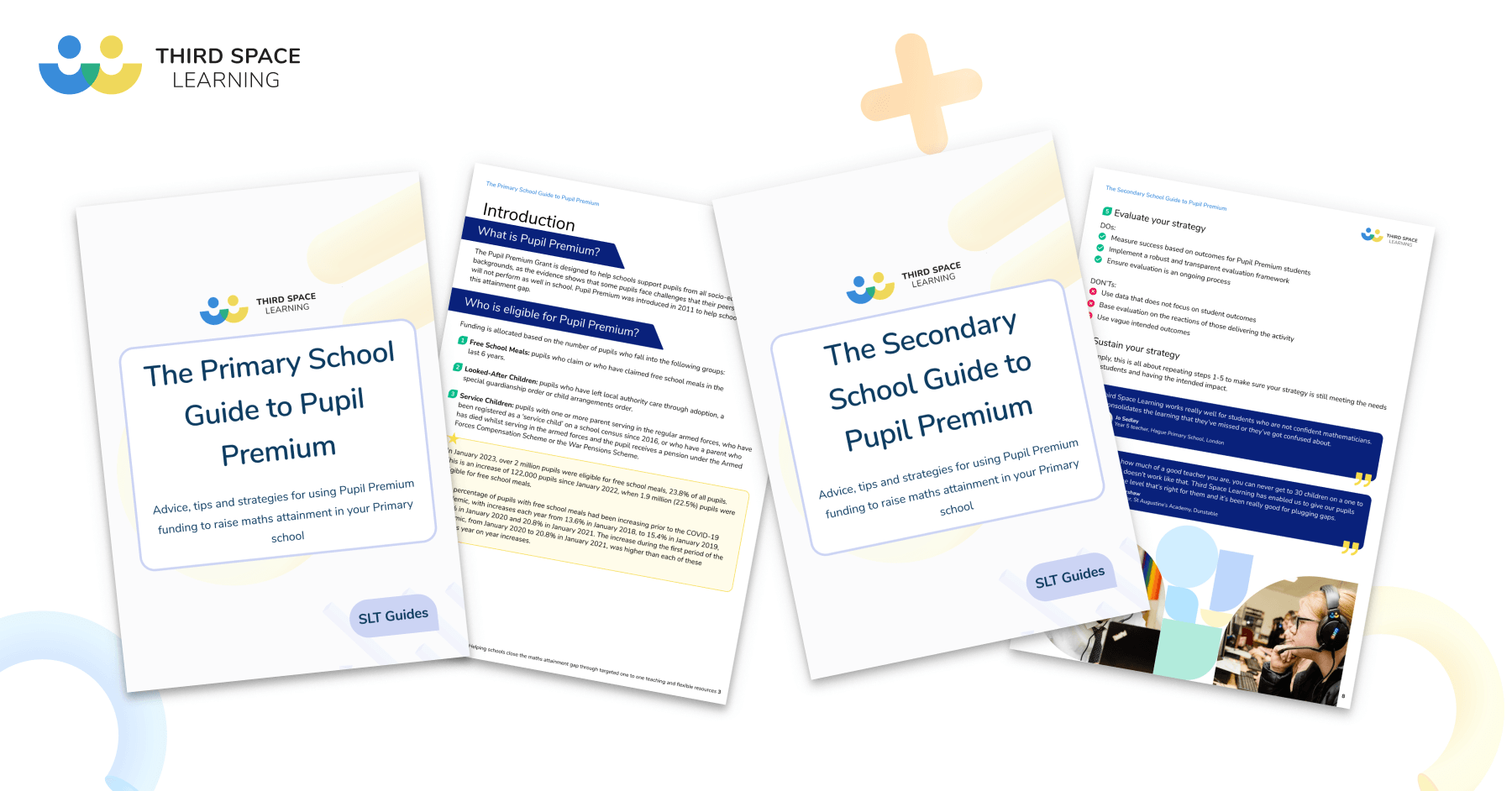
The Senior Leader's Guide to Pupil Premium
An informative and concise guide on making the best choices for all the children in your care
Download Free Now!What is pupil premium?
Pupil premium is money given to schools to help them support disadvantaged pupils. The government introduced it in 2011, and it gives schools extra resources to improve outcomes for children aged 4 to 16 in state-funded schools in England.
Schools decide how to spend it. They also have to publish how they spend it, and show what difference it made.
Pupil premium funding 2026 to 2027
Rates rose again for the 2026 to 2027 academic year. Full details are on gov.uk.
For the 2025/2026 academic year, the rates for all types of Pupil Premium increased slightly on the previous year. You can see full details on gov.uk.
| Who it is for | Rate per pupil |
|---|---|
| Primary pupils eligible for free school meals, or eligible in the past 6 years | £1,550 |
| Secondary pupils eligible for free school meals, or eligible in the past 6 years | £1,100 |
| Pupils currently or previously looked after by a local authority or other state care | £2,690 |
| Pupils with a parent serving in the armed forces (service premium) | £360 |
Schools must publish a pupil premium strategy statement covering how they plan to spend the grant, and how they will know whether it worked. The deadline is 31 December each year.

Since 2013, Third Space Learning has been helping school budgets stretch further through scalable, cost-effective one to one maths tutoring.
One to one maths sessions with AI tutor Skye are 90% cheaper than other tutoring providers.
Most schools use Pupil Premium funding to help cover the cost of Third Space Learning tutoring.
READ MORE: Pangbourne Primary School explains how the tutoring works for their pupil premium children
Who qualifies for pupil premium funding?
Children eligible for pupil premium are those who:
- Are eligible for free school meals, or have been eligible in the previous six years
- Have been looked after, or are covered by a guardianship or residency order
- Have been adopted from care
- Have a parent serving in the armed forces
From September 2026, free school meals extend to every household on Universal Credit. Only pupils eligible under the targeted free school meals threshold count towards Ever 6, so a wider free school meals roll does not automatically widen your pupil premium cohort. Anyone writing a three-year strategy this autumn is planning for a group that shifts partway through it.
How to spend pupil premium funding effectively in primary and secondary schools
Below is the current evidence on how to spend your pupil premium funding, ordered so you can work down it. Most of the strategies suit both primary and secondary schools, and the few that apply to one phase only are marked.
Included are a 15-point success plan drawn from what the most successful schools did, what Ofsted looks for under the framework that changed in November 2025, and 20 strategies with the months-progress figure and cost band for each. Take it into your next strategy meeting and work down from the top.
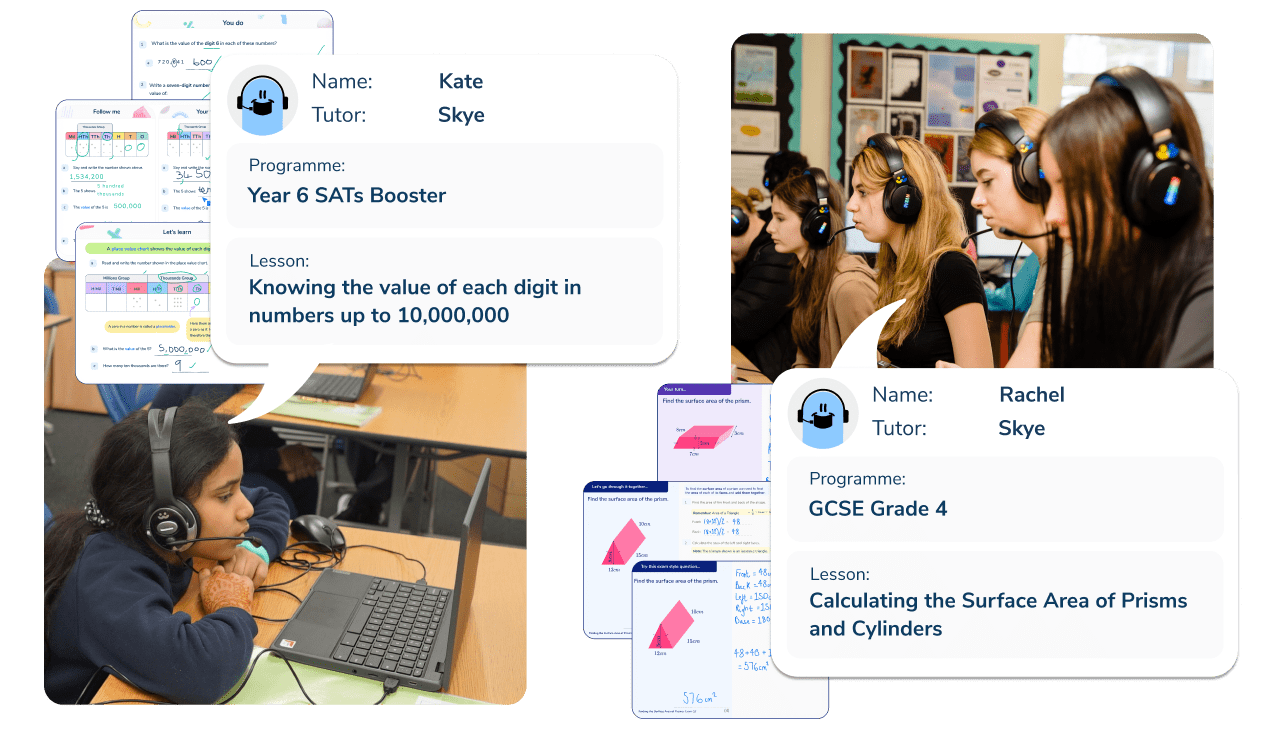
Meet Skye, the spoken AI tutor making maths success possible for every student.
Teachers and math experts built Skye on the same principles that make human tutoring effective. Its pedagogy, curriculum and lesson structure draw on more than 2.2 million tutoring sessions.
But with more flexibility and a lower cost, schools can scale online maths tutoring to support every student who needs it.
Watch Skye in actionPupil premium spending and Ofsted
Ofsted scrutinises pupil premium spending, and you still decide how to spend it. Inspectors check that the money is doing what it is meant to do.
Ofsted has inspected under a new framework since 10 November 2025. There is no longer an overall effectiveness grade, and there is no longer a graded judgement called leadership and management. Inspectors now grade separate evaluation areas on a five-point scale: Exceptional, Strong Standard, Expected Standard, Needs Attention, Urgent Improvement. Ofsted publishes the result as an Ofsted report card.
Pupil premium now sits under Inclusion. The State-funded school inspection toolkit sets out what inspectors look for, and it names the strategy directly. Under supporting disadvantaged pupils, it expects that:
- Leaders have a secure understanding of their disadvantaged pupils’ needs, and use the best available evidence to inform their approaches, including regularly reviewing their pupil premium strategy
- The pupil premium strategy is aligned with wider school improvement priorities, and staff are clear about their roles in delivering it
To reach the strong standard, leaders also have to show that the strategy is implemented and monitored effectively, including through ongoing training and support for staff.
In practice, inspectors will ask you three things about any line of spending: why you chose it, how you know it is working, and what you changed when it was not.
Four things to have ready
- Your pupil premium strategy published on the school website, showing how you plan to narrow the attainment gap
- The amount of pupil premium funding the school received this year and last
- A clear account of how you spend it and how you make those spending decisions
- Outcomes data showing the impact on the learning and progress of eligible pupils
Governors should be able to show they challenge the senior leadership team on differences in achievement between groups, and what the school is doing about them.
Inspectors keep returning to one connection: whether your pupil premium strategy can be traced to the attainment gap it is meant to close. The November 2025 framework changed what Ofsted expects to see on pupil premium, and the report card records it under Inclusion.
Your 15-point pupil premium success plan
Sir John Dunford spent two years as National Pupil Premium Champion examining what the most successful schools did, talking to schools and acting as a channel between them and the Department for Education. The role ended in 2015, and his findings have held up well since.
He found that successful schools used a menu of approaches targeted at the needs of individual pupils, rather than committing to one or two strategies.
The most successful schools:
- Collected and analysed data on groups and individual pupils, and monitored it over time
- Focused on teaching quality
- Identified the main barriers to learning for disadvantaged children
- Put interventions in place when progress slowed
- Engaged parents and carers in their child’s education
- Referred to existing evidence about what works
- Trained all classroom staff in the school’s strategies
- Secured staff commitment to the pupil premium agenda
- Trained governors on pupil premium
When deciding which approaches to use, heads and teachers needed to: - Decide what the school wants to achieve with the funding
- Analyse the barriers to learning before choosing strategies
- Decide on desired outcomes and success criteria for each
- Monitor and evaluate impact, and change what is not working
- Decide on an optimum range of approaches
- Keep up to date with research
Sir John said: “In future, it will be up to regional school commissioners, local authorities, multi-academy trusts and school alliances to keep the pupil premium cause at the top of their list of priorities. The social, moral and educational case for giving additional support to children born less fortunate than others remains as strong as ever. Every school needs a Pupil Premium Champion.”
How one school spends its pupil premium on one-to-one maths tuition
Many schools put a share of their pupil premium into one-to-one tuition for disadvantaged pupils, because a tutor can work on the exact gap a pupil has while the class moves on.
Catherine Prole, Deputy Headteacher at St Michael’s Church of England Primary School, tracked what happened to her pupil premium pupils:
This past year 100% of our Pupil Premium pupils passed their maths SATs, and 50% of those at Greater Depth! On top of this, 100% of the Year 4 and 5 pupils on the programme achieved Age Related Expectations or higher. It’s clear to see that Third Space has been having an impact.
Catherine Prole, Deputy Headteacher, St Michael’s Church of England Primary School
AI maths tutor Skye now delivers Third Space Learning’s one-to-one maths interventions. Every pupil who needs individual support gets it, in a weekly session of their own.
The one to one tutoring that Pakeman Primary introduced to their pupils has now supported over 196,000+ pupils to help close the maths attainment gap – the majority in receipt of pupil premium funding.
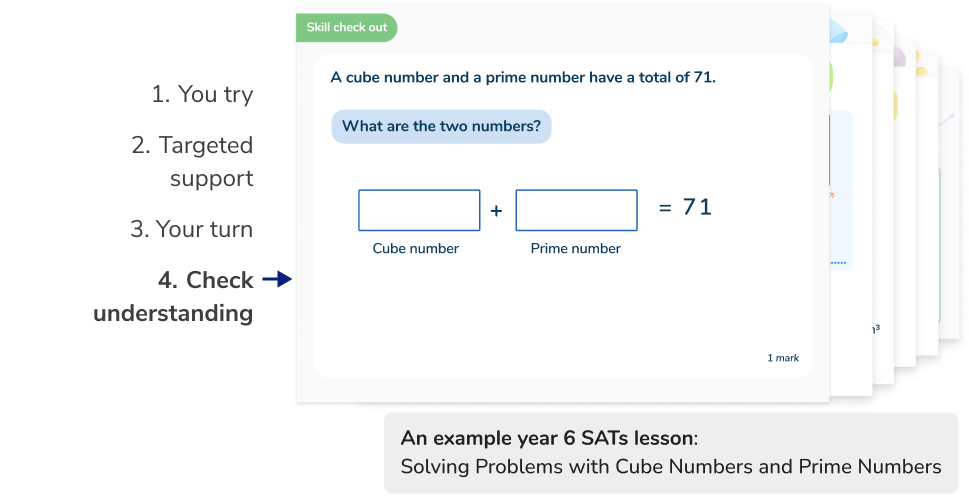
Evidence the impact of your pupil premium interventions
Pupils’ needs vary, and no intervention has the same impact in every school. The Education Endowment Foundation and the Sutton Trust have built up enough trial evidence that you can now put a figure on most approaches.
The EEF’s Teaching and Learning Toolkit rates common school strategies on three things: how much progress pupils made, how strong the evidence is, and what the approach costs. It is updated as new studies land, and several strands moved during 2025.
Two things to hold in mind when you read any toolkit figure.
Read the months as an average. A strand rated +6 months is the mean result across many studies, in many schools, with many different cohorts and staff. Your school sits somewhere on that spread, and the toolkit cannot tell you where.
How you implement it decides most of the result. The EEF’s own guidance is consistent on this: a +4 approach delivered properly will outperform a +7 approach delivered badly. So when you are choosing between two strands with similar ratings, pick the one your staff can actually run this year, and put your planning time into delivery.
The EEF’s breakfast club research shows what happens when a headline gets quoted without anyone checking what sits under it. The headline that circulated in 2016 was two months’ additional progress in reading, writing and maths. After the Institute for Fiscal Studies found an error in the trial’s randomisation code, the EEF republished the evaluation. Year 2 kept the two months, at lower evidence security than before. The Year 6 result was revised to zero. What survived is still useful: better behaviour, and attendance worth around 26 fewer half-days of absence a year for a class of 30.
20 pupil premium strategies and what the evidence says each is worth
We have ordered the strategies below by the EEF’s current months-progress figure, strongest first. Cost bands are the EEF’s own.
1. Metacognition and self-regulation
Cost: Very low · Impact: +8 months
Metacognition and self-regulation help pupils think explicitly about their own learning. Teachers can give pupils specific strategies to set targets, then monitor and evaluate their own progress. Self-regulation depends on the learner managing their own motivation.
This is the strongest thing on the list and one of the cheapest. It usually needs staff training rather than new resources.
2. Reading comprehension strategies
Cost: Very low · Impact: +7 months
Comprehension strategies improve reading by focusing on understanding rather than decoding. Techniques include:
- Inferring meaning from context
- Summarising or identifying key points
- Using graphic or semantic organisers
- Questioning strategies
- Pupils monitoring their own comprehension and spotting where it breaks down
These work particularly well with children aged 8 and over who are behind with their reading.
3. Feedback
Cost: Very low · Impact: +6 months
Feedback can be verbal or written, given individually or as whole class feedback. It tells pupils where they are against the learning objective and redirects what they or the teacher do next.
The EEF moved this strand down from its old +8 rating, so a page or policy still quoting eight months is working from an old figure.
4. Oral language interventions
Cost: Very low · Impact: +6 months
Oral language interventions put spoken language and verbal interaction at the centre of the classroom, so pupils benefit from talking explicitly about content and about how they are learning.
Approaches include targeted reading aloud and discussion with young children, explicitly extending spoken vocabulary, and structured questioning to build comprehension.
Spoken maths interventions work on the same principle. Skye, our AI maths tutor, holds a spoken conversation with a pupil, and saying an answer out loud exposes the reasoning behind it in a way a typed answer does not, which is the difference between spoken and text-based AI tutoring.
5. Peer tutoring
Cost: Very low · Impact: +6 months
Peer tutoring has pupils working in pairs or small groups to support each other. Cross-age tutoring pairs an older pupil with a younger one. Reciprocal peer tutoring alternates who takes the tutor role.
The value comes from pupils taking responsibility for teaching and for judging how well it went.
6. Mastery learning
Cost: Very low · Impact: +5 months
Mastery learning breaks content into units with specified learning objectives. Pupils work through each block in sequence and have to reach a set level, measured by testing, before moving on. Those who do not reach it get additional tuition, peer support, small-group discussion or homework until they do.
In maths, mastery teaching usually means the whole class works through a topic together, with extra support for anyone who has not reached the threshold before the class moves on.
7. Collaborative learning
Cost: Very low · Impact: +5 months
Collaborative learning sets tasks that pupils work on together in small groups, with each pupil having an equal chance to contribute. Tasks can be joint, where members complete different parts of a common outcome, or shared, where the group works together throughout.
The approaches that work best are the ones that force real interaction between group members.
8. Phonics [primary school]
Cost: Very low · Impact: +5 months
Phonics teaches the relationship between sounds and the spelling patterns that represent them. Children learn to read by segmenting and blending words.
Children sit a phonics screening check at the end of Year 1. Some pupils will need continued phonics teaching well beyond the end of Key Stage 1, and it works best taught alongside vocabulary, comprehension and spelling in the same sessions.
9. One-to-one tuition
Cost: Moderate · Impact: +5 months
In one-to-one tuition, a teacher, teaching assistant or other educator gives a pupil intensive individual support. It usually sits outside lesson time, so pupils still get their class teaching. The evidence is clear that the tuition should track what the class is covering that week.
Guidance reports suggest short, regular sessions of about 30 minutes, three to five times a week, over a block of six to twelve weeks.
You need to know your pupil premium spending is having a measurable effect on the pupils who need it most. An independent trial showed pupils make an average of 7 months’ progress in 14 weeks of weekly tutoring. You also get regular reports on gaps diagnosed, concepts covered, engagement and progress over time, which is the evidence your strategy statement needs.
AI tutoring is new enough that the evidence base for AI tutoring is still thin in places, so check what has actually been measured before you commit funding to it.
Cost is the usual barrier. Where the model is a fixed fee rather than a price per pupil, some schools now provide one-to-one tutoring for every pupil who needs it.
10. Individualised instruction
Cost: Very low · Impact: +4 months
Individualised instruction gives pupils different tasks or activities matched to what each of them needs. It is hard to run well with thirty different starting points in one room, and planning it takes real time.
The manageable version is usually a small number of task tiers, planned once and reused, which is where most differentiation strategies start. Where schools use digital programmes to do the individualising, staff still need to understand the pedagogy behind the software.
11. Parental engagement
Cost: Very low · Impact: +4 months
Involving parents in their children’s education improves outcomes. Approaches range from workshops that build parents’ own literacy or IT skills, through general encouragement to read at home, to intensive programmes for identified families.
Engagement is easier to achieve in primary schools than in secondary. One of the cheapest methods with evidence behind it is text-message alerts from school. In maths, most parental engagement work starts by showing parents how calculation methods have changed since they were at school, because until then they cannot help at home.
12. Small group tuition
Cost: Low · Impact: +4 months
Small group tuition puts a teacher or teaching assistant with a group of up to about five pupils, usually in a separate space. It generally supports lower-attaining pupils or those falling behind, though pupils at any level can benefit.
It costs less than one-to-one and delivers a little less. Whether group tutoring or one-to-one is the better use of your budget depends on how far behind the pupils are and how many of them there are.
13. Social and emotional learning
Cost: Very low · Impact: +3 months
Social and emotional learning targets how pupils interact with others and manage their emotions, rather than aiming at academic goals directly. It shows up as classroom well-being programmes, specialist programmes for particular pupils, or whole-school approaches.
Staff usually need professional development to deliver it well.
14. Behaviour interventions
Cost: Low · Impact: +3 months
Behaviour interventions aim to improve outcomes by reducing both low-level disruption and more challenging behaviour. They range from a whole-school ethos through to specialist school interventions for individual pupils.
The evidence varies a lot between programmes, so check the track record of the specific programme you are buying. The category average will tell you very little about it.
15. Summer schools
Cost: Moderate · Impact: +3 months
Pupils experience summer learning loss over the holidays. Summer schools can offset some of that, particularly where they have clear learning aims and teach in small groups. Some studies show greater gains for disadvantaged pupils, though the finding is not consistent.
The EEF now gives a single figure of +3 months, in place of the range that used to be quoted. If a summer school is beyond your budget, term-time intervention strategies give you the same targeting for a fraction of the staffing cost.
16. Reducing class size
Cost: Very high · Impact: +1 month
Smaller classes give teachers more time per pupil and more approaches to choose from. The evidence does not show a clear effect until class size drops below about 20, which makes it extremely expensive to achieve.
At +1 month for very high cost, the EEF rates this as low impact. It is rarely a defensible use of a pupil premium budget, and almost anything else on this list gives you more for the money.
17. Setting or streaming
Cost: Very low · Impact: 0 months
Grouping pupils by attainment for particular subjects is common, especially in secondary schools. The EEF now rates it as having no impact overall, based on very limited evidence.
The averages hide something important for pupil premium specifically. Setting shows a small positive effect for higher attainers and a small negative effect for lower attainers. Since pupil premium money exists to support pupils who are more likely to sit in the lower sets, spending it on setting works against the pupils it is meant to help. That finding is the main argument for mixed ability grouping over ability grouping in primary maths.
18. Outdoor adventure learning
Cost: Moderate · Impact: no figure published
Adventure learning develops skills through outdoor experiences such as climbing, assault courses, sailing or canoeing, with well-trained staff and usually no formal academic element.
The EEF has withdrawn its months-progress figure for this strand. It now rates the impact as unclear on insufficient evidence, having identified only six studies, none independently evaluated. Any figure you see quoted for outdoor adventure learning predates that change.
There are still reasons to run it. Studies point to gains in self-confidence, self-efficacy and motivation, particularly for more vulnerable pupils and teenagers, and longer programmes of a week or more look more effective than short ones. Cheaper outdoor work, including outdoor maths activities, reaches some of the same engagement gains without the residential cost. Fund it for confidence, motivation and engagement, and write those into your strategy statement as the outcomes you expect.
19. Digital technology
Cost: Dependent on technology· Impact: no figure published
Digital technology supports learning through what teachers use, such as an interactive whiteboard, and what pupils use, such as software that adapts to them. The evidence has always been mixed, and it points towards writing and maths as the areas where it helps most.
Start from the teaching and learning objective, then find the tool that serves it, and budget for CPD at the same time. Most schools already own more technology than they use, so begin with a school technology audit of what is already on the shelves.
20. Early years interventions [primary school]
Cost: Moderate · Impact: no figure published
Early years interventions make sure children get the pre-school or nursery experience that prepares them for school. The ones that work run over more than a year, employ well-qualified staff, mix children from different backgrounds and include a strong educational component. Some offer parental support alongside.
Which pupil premium strategies suit your cohort?
The four strongest strategies on this list all sit in the EEF’s lowest cost band, and none of them involves buying anything. Metacognition at +8 months, reading comprehension at +7, feedback and oral language at +6: every one turns on how your teachers teach, and the only real cost is training time and the meetings to plan it. Reducing class size, at very high cost for +1 month, sits last for a reason.
That gives you an order to work in. Spend first on what changes classroom practice for every pupil, because that reaches your disadvantaged pupils along with everyone else. Then add targeted support, one-to-one or small group, for the pupils still behind after it. Then spend on the wider barriers, attendance, breakfast and family engagement, with what is left.
Tracy Hart, Assistant Headteacher at Aveley Primary School, described the pupils she targeted:
“It’s great for those children that are working below where they need to be, but also for the children who would benefit from building confidence and they find that with the 1-to-1. Third Space Learning has certainly helped with those children that had more of a barrier than others.”
Tracy Hart, Assistant Headteacher, Aveley Primary School
If your budget is already committed, several of the highest-rated strands above cost nothing but staff meeting time, and there are more low cost pupil premium intervention ideas that need no new spending.
Pupil premium FAQs
A pupil premium strategy is a strategy used in schools to make the best use of funding available to support learners from disadvantaged backgrounds. Schools must plan how to strategically use this funding from a ‘menu of approaches’ set by the Department for Education and report on spending.
Pupil premium funding is allocated to pupils from disadvantaged backgrounds, including children eligible for Free School Meals or who have been eligible in the past six years and children previously looked after by a local authority or other state care. There is also service pupil premium, which is additional funding for schools with pupils whose parents serve in the armed forces.
Here’s a 5-point plan based on guidance from the EEF:
1. Identify your pupil premium students’ needs
2. Choose an evidence-based approach
3. Consider your context to develop your strategy
4. Deliver and monitor your strategy
5. Evaluate your strategy

DO YOU HAVE STUDENTS WHO NEED MORE SUPPORT IN MATHS?
Skye – our AI maths tutor built by teachers – gives students personalised one-to-one lessons that address learning gaps and build confidence.
Since 2013 we’ve taught over 2 million hours of maths lessons to more than 170,000 students to help them become fluent, able mathematicians.
Explore our AI maths tutoring or find out about one to one tuition for your school.


![Primary Maths Intervention: How To Plan It In 5 Decisions [Webinar]](https://thirdspacelearning.com/wp-content/uploads/2026/10/primary-maths-intervention-webinar-featured-image-1024x576.jpg)
![Pupil Premium Maths Tutoring: How One MAT Scaled AI Tutoring to Close the Attainment Gap [Webinar]](https://thirdspacelearning.com/wp-content/uploads/2026/06/Screenshot-2026-06-24-at-17.24.57-1024x574.png)